


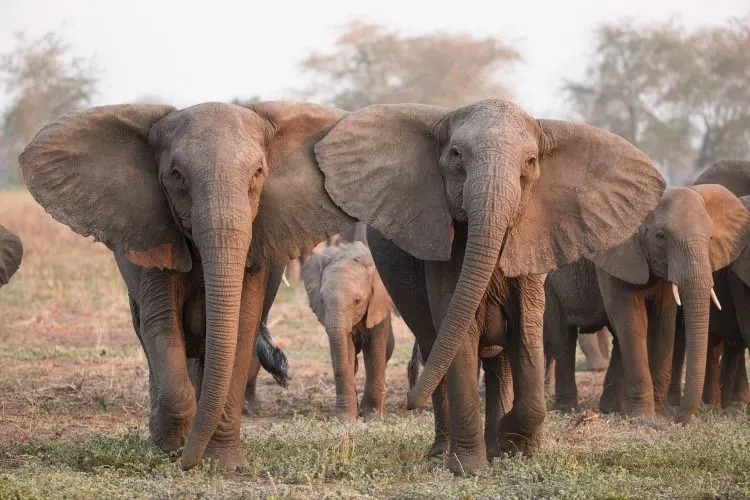
The severe drought that has resulted in a serious water scarcity in Zimbabwe has left around 55 elephants dead in the country’s largest national park, the Hwange National Park. While some of the creatures died in search of water, the others were killed by residents as they wandered into surrounding communities in search of food.

Tinashe Farawo, spokesman for Zimbabwe’s Parks and Wild Life Management Authority said that, “The elephants are traveling long distances to look for water and end up invading communities. Some died of thirst in the park, some while in search of water.”

Many of the remains of the elephants were found within 50 metres from the water pans, indicating that they died just before reaching the water.
Poaching for ivory has reduced the population of African elephants from 415,000 to 111,000 over the past decade. But for Zimbabwe, the situation is just the opposite as the country is struggling with an overpopulation of elephants. “Hwange was meant for 15,000 elephants but at the moment we are talking of more than 50,000,” Mr Farawo said.
An adult elephant consumes 680 litres of water per day on an average along with 450 kilograms of food. The harsh drought resulting from an abnormal El Nino season has drastically reduced the water levels throughout the country making water supply scarce. Earlier this summer, the country’s two largest cities started rationing water to their residents and the supply of running water was reduced to once a week.
The pools in the national park have turned into dried mud pits and many elephants are getting stuck in them. Baby elephants are the worst sufferers as the mothers do not have enough milk to feed them. Some NGOs are supplying bales of hay to the starving creatures by using trucks. Other than elephants, animals like zebras and buffaloes are also suffering the effects of the drought.

“That’s why we are saying allow us to trade in these animals, and we can raise funds for their security and food. But the so-called conservationists condemn us,” Farawo said.
The government of Zimbabwe has often complained about the rising number of elephants and has expressed the intention of selling them to reduce the numbers and generate funds. The position has been strongly opposed by animal conservation groups.
Lenin Chisaira, director of Advocates4Earth, a group opposing the move to sell elephants said that, “The government has over the years been allowing mines to develop in Hwange and that’s reducing grazing land, and those operations have impact on water. Even polluting the water. So the government is squarely to blame for all this.
With the worst drought in 20 years coming on top of a collapsing economy, the southern African nation is in the middle of a deep crisis.















Leave a Reply