


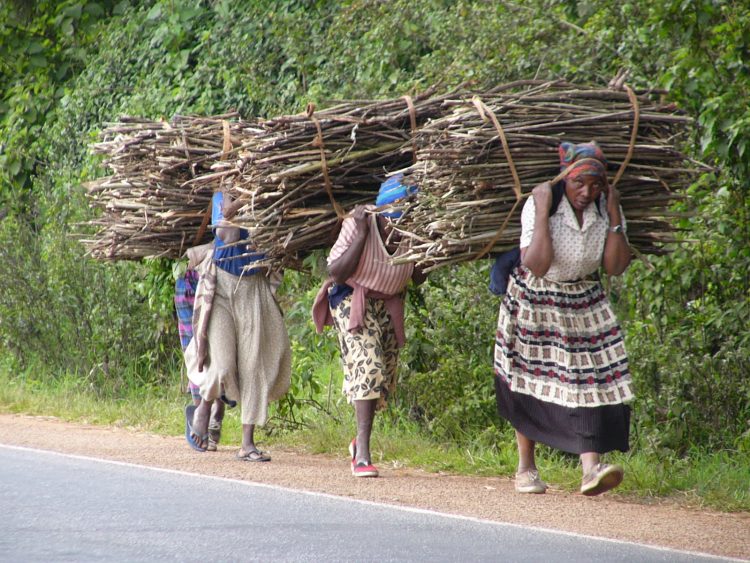
As much as half of the world’s work is unpaid, and most of it is done by women. It is no secret that women disproportionately shoulder the burden of unpaid work. This imbalance not only robs women of economic opportunities, but it is also costly to society in the form of lower productivity and forgone economic growth, the International Monetary Fund (IMF) said this week.

In its new study published on 15 October 2019 and titled “Reducing and Redistributing Unpaid Work: Stronger Policies to Support Gender Equality”, the IMF reveals that women do two more hours of unpaid work per day than men, with large differences across countries.

While much unpaid care work is done entirely by choice, constraints imposed by cultural norms, labour market features or lack of public services, infrastructure, and family-friendly policies matter, the study said.
By not fully engaging women, the economy is misallocating resources, having women do low-productivity tasks at home instead of taking advantage of their full potential in the marketplace, the study added.
“It also misses exploiting the complementarity between women and men in the workplace. The result is lower productivity and economic growth. This gender gap in unpaid work is not just unfair, it is clearly inefficient,” the Bretton Woods institution based in Washington said.
A fairer allocation of unpaid work would not only benefit women, but would also lead to more efficient work forces and stronger economies.
Policies
The IMF said policies can help reduce and redistribute unpaid work. In developing economies, measures to improve water supply, sanitation, electricity, and transportation are critical to free women from low-productivity tasks.

UNICEF estimates that women spend 200 million hours per day worldwide simply fetching water.
“Better access to electricity and water and less expensive appliances helped boost female labor force participation in Mexico and Brazil. Expanding internet access to the entire population can help women take advantage of the gig economy and flexible work arrangements,” the study said.
“Governments need to ensure access to education and health care for women. Without proper human capital, women’s possibilities in the labour market are very limited.”
According to UNESCO, 130 million school-age girls are not in school. It is not only a matter of providing the services, but also guaranteeing their use.
“Enshrining women’s rights in law could help to reshape social institutions and values that prevent access to education and healthcare. Efficient and flexible labour markets help redistribute unpaid work. Active labour market policies, like those in Switzerland, can facilitate job matching,” the study authored by Cristian Alonso, Mariya Brussevich, Era Dabla-Norris, Yuko Kinoshita and Kalpana Kochhar recommended.
“We find that flexible work arrangements are associated with less female unpaid work and make for a better work-life balance.”















Leave a Reply